
Where can I meet God?
The Same House, a Different Relationship

Prologue
We often imagine that meeting God is something that happens somewhere far beyond the universe.
Somewhere distant.
Somewhere beyond this life.
Somewhere we may reach only after we die.
But Jesus spoke of God differently.
He spoke of Him as a Father—and invited us into the home where His Father lives.
As we make our way through the long journey of life, we inevitably wonder where it is all leading. Jesus answers that question with words filled with love for His Father:
“I am the way and the truth and the life. No one comes to the Father except through me.”
Put more simply—and perhaps more tenderly—His words might sound like this:
“Without me, you won’t find your way to the home where my Father is waiting.
Want to come to my house?”
Once we accept that invitation and follow the way Jesus shows us, something remarkable begins to unfold.

Part 1 — A Servant Meets a Master
For a long time, I assumed that because Moses spoke of God and Jesus spoke of God, they were simply speaking about the same God in much the same way.
But Hebrews 3 made me see something I had never noticed before.
The house was the same.
God was the same.
But the relationship inside the house was different.
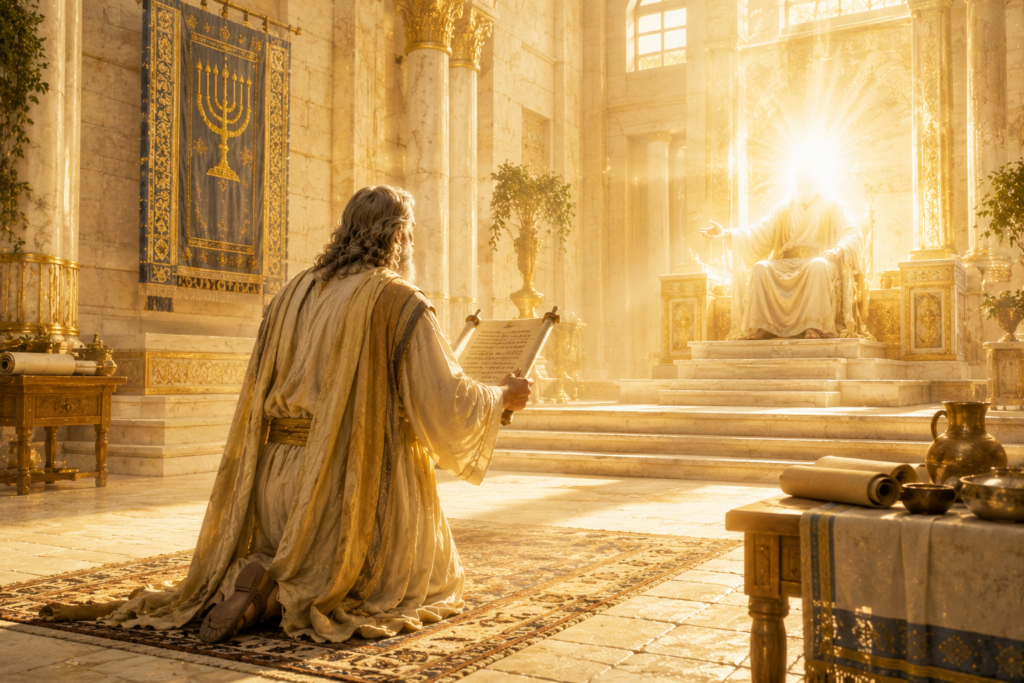
Hebrews describes Moses as faithful in all God’s house as a servant.
So imagine taking Moses by the hand and walking into that house with him.
What would we hear?
The words of a master.
Commands.
Laws.
A way of life to follow.
The servant’s story might sound something like this:
“Today, my master gave me this work to do.”
In the house we enter with Moses, God stands before us as the Master who establishes order and gives His law.
Part 2 — A Son Meets His Father
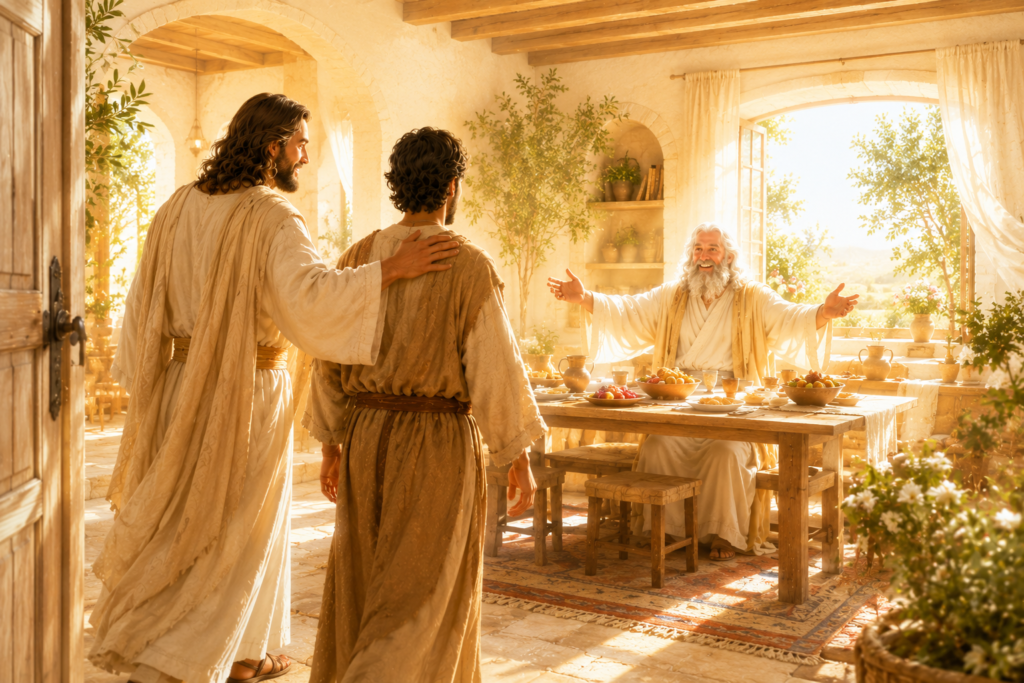
But Jesus enters the house differently.
He comes not as a servant, but as the Son.
Take the Son’s hand and walk inside with Him, and suddenly the conversation changes.
Jesus gives those who believe in Him the right to become children of God. And He can say:
“Whoever has seen me has seen the Father.”
Now the story inside the house sounds different:
“Today, my Father showed me this love.”
Moses, as a servant, represented the law.
Jesus, as the Son, revealed the Father.
The house was the same.
God was the same.
But the relationship had changed.
A servant meets a master.
A son meets his father.
Part 3 — A Bride Meets Her Bridegroom
And then I found myself wondering: what happens when Jesus comes again—not only as the Son, but as the Bridegroom?
Perhaps this takes us even deeper into the house.
This image did not suddenly appear with Jesus. It had been woven through Scripture long before He came.
The Song of Songs tells of two lovers seeking and longing for one another.
The prophets described Israel as a bride, and God as the husband who would not let her go.
And John, at the end of his own long journey with Jesus, saw it all come full circle—a wedding feast, a bride prepared, a voice from heaven saying, Blessed are those who are invited to the marriage supper of the Lamb.
So when Jesus comes as the Bridegroom, He is not adding a strange new title to Himself.
It is as though He is leading us into the deepest room of a story that has been unfolding throughout Scripture.
Following Jesus as the Bridegroom, we move beyond simply receiving the commands of a master or resting in the protection of a father.
We enter the mystery of union.
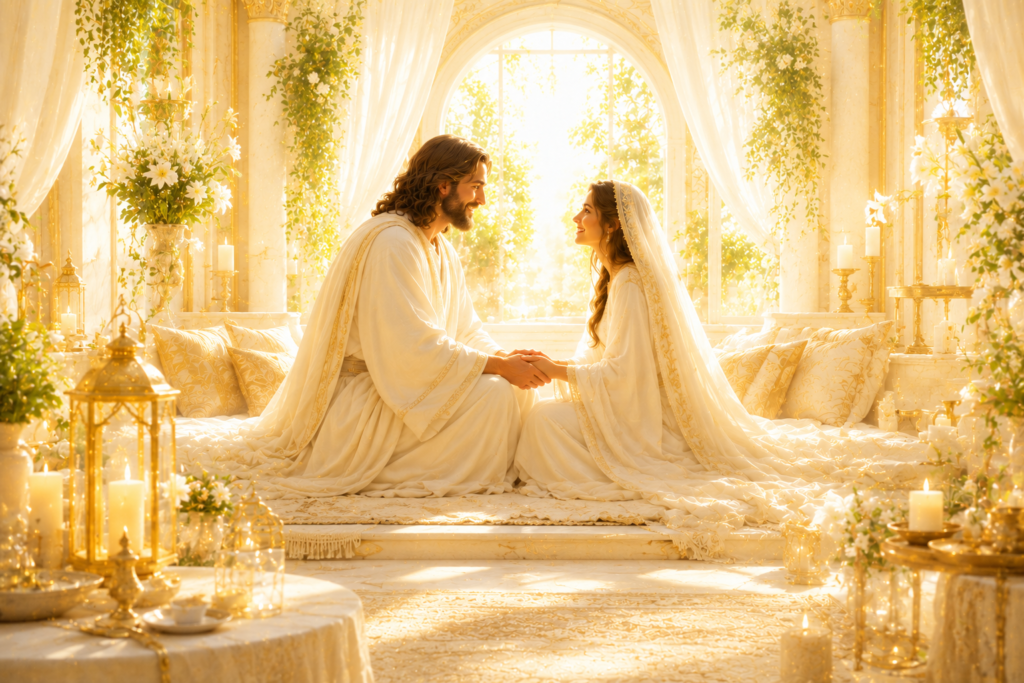
And there, in the deepest room of the house, we encounter the language of love:
“You are my beloved bride.
I am your husband.”
No longer the language of command.
No longer only the language of protection.
This is the language of everlasting love.
A servant meets a master.
A son meets his father.
A bride meets her bridegroom.
The house has not changed.
God has not changed.
But the relationship has grown deeper.
Epilogue
Perhaps this is one way of seeing the great story running through Scripture: God continually drawing human beings closer to Himself.
From obedience.
To intimacy.
To union.
And perhaps the invitation has been there all along.
“Want to come to my house?”
At first, it sounds almost like something a childhood friend might say.
But the farther we follow the invitation, the deeper its meaning becomes.
Come, and meet the Master.
Come closer, and meet the Father.
Come deeper still, and discover the love of the Bridegroom.
Even today, He stands quietly at the door of our hearts and knocks.
And the question is still the same:
“Without me, you cannot find your way to the home where the God of truth and love is waiting.
Want to come to my house?”